Beginner's guide to record players
So, you've been thinking about starting a record collection. If you're passionate about music, owning that favourite album on vinyl is probably the most satisfying way to hear it. The warmth and richness that's naturally built into the format and the amazing artwork are just a few of the perks.
Direct drive or belt drive?
Direct drive turntables start up faster and are less likely to skip. They're the only option for DJing with records. However, motor vibrations can cause a little distortion.
Belt drive record players absorb most of the vibration for clearer sound, but speed may be a tiny bit less consistent. Better for home listening than mixing.
Automatic or manual?
Automatic: Hit play and the tonearm moves the needle to the beginning. It lifts the needle and returns it at the end -- ideal for drifting off to jazz.
Manual: You're fully in control. Great for DJing or skipping to certain tracks. Look for a 'cueing lamp' to see between grooves.
Key turntable terminology
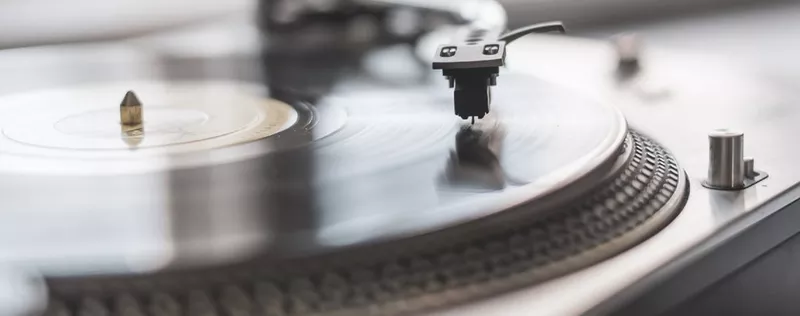
- Cartridge: Houses the stylus and electrical components for transmitting sound.
- Stylus: The needle that traces the grooves.
- Platter: The rotating platform holding the record.
- Tonearm: Holds the cartridge and guides the stylus.
- Anti-skate: Keeps the tonearm from pulling inward.
Two-speed or three-speed?
All modern records play at 33 1/3 RPM or 45 RPM. Pre-1960s records may need 78 RPM -- you'll need a three-speed turntable for those.
Look out for a built-in pre-amp
For a 'plug-and-play' setup, a turntable with a pre-amp lets you connect directly to speakers. Some have Bluetooth built in too.
Transfer music to MP3
Many record players can convert vinyl to MP3 via USB. Some LPs include a download code for getting the digital version.
Setting up your first turntable
- Choose a stable surface away from vibrations and sunlight.
- Balance your tonearm using the counterweight.
- Set the tracking force to the recommended number.
- Level your turntable with a spirit level.
- Connect cables according to instructions.
Turntable maintenance and care
- Wipe the platter and tonearm regularly.
- Store records vertically in dust sleeves.
- Replace the stylus after about 1,000 hours of play.
- Turn it off when not in use.