What are open-ear headphones and how do they work?
Open-ear headphones are getting more and more popular. And it's not that hard to see why. We're all splitting our time between remote work, commuting, fitness and family life. Which means you need a set of cans that can keep up and keep you connected -- without shutting out the real world. That's where open-ear designs shine, letting you listen to your tunes and still hear what's happening around you.
In this guide, we'll break down what open-ear headphones actually are, how they work and the top models worth checking out. Right, let's take a look...
What are open-ear headphones?
Open-ear headphones are exactly what they sound like. They're designed to let you listen to audio without blocking your ear canal. Unlike in-ear buds that slot inside your ears or over-ear headphones that cup around them, open-ear models sit just outside -- usually resting gently on the ear or slightly in front of it.
How they sit on your ears:
Depending on the design, they might...
- Hook over your ears with a lightweight clip. These are great for daily wear or running, as they'll stay in place while you clock up the 5Ks.
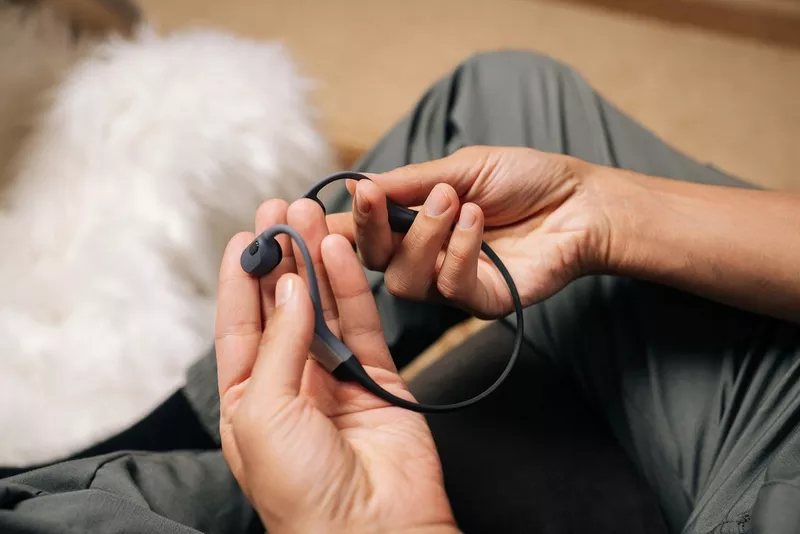
- Rest on your cheekbones using a wraparound band. Once they're on, they're not going anywhere.
- Sit in your ear with an open ring, leaving space for external sound. They're a hybrid somewhere between in-ear and open-ear, giving you the best of both worlds.
- Be built into the arms of glasses, sending sound toward your ears using bone conduction tech (but more on that later).
No matter what style you pick, the idea is the same. You get to hear your music _and_ anything that's happening nearby.
How do open-ear headphones work?
There are two main technologies powering open-ear headphones nowadays -- air conduction and bone conduction. They deliver the sound differently, but both keep your ears open and aware.
Air conduction
These models use small, carefully angled speakers that beam sound toward your ear canal without covering it. You'll hear your audio clearly, while your ears stay open to outside sounds. It still feels natural and airy too. Most of the 2026 buds you see online or in-store will use this method.
Bone conduction
Here, the headphones rest on your cheekbones or the spot in front of your ears. Instead of sending sound through the air, they send micro-vibrations through your bones straight to your inner ear. It sounds weird, and it kind of is. It's genuinely like something out of a sci-fi flick.
Why choose bone conduction?
- Your ear canal is completely free.
- They're ideal for swimming (as water won't block the vibrations).
- They tend to be slightly lighter on bass than air-conduction types. Your ears will thank you!
Key benefits of open-ear headphones
You might think they seem like a gimmick at first, but they genuinely solve everyday problems people have with traditional headphones...
You stay aware of your surroundings
This is arguably the number one selling point. Open-ear models let you hear approaching cars, train announcements, co-workers calling your name, your doorbell, cyclists whizzing by, and kids and pets at home.
All day comfort & less ear fatigue
With nothing plugging or covering your ears there's zero pressure, no uncomfortable heat build-up and none of that dull ache you sometimes get with other buds. And that means you won't start getting sore if you're wearing them for hours at a time.
Great for calls
A lot of models have smart mic setups built-in. And because your ears aren't blocked, you'll hear your own voice naturally. This is far more comfortable, especially on long work calls where you've got lots to say.
Limitations you should know before buying
Open-ear headphones are great, but they're not magic. Knowing their limits will help you pick the right model...
- The bass isn't as strong -- Deep, thumping bass needs a sealed space inside your ear. You'll still get a solid sound, but not the 'club-level' low end you might like.
- They struggle in very noisy environments -- Because they don't block sound, a loud train carriage or a busy office might drown out your audio.
- There's some sound leakage -- Even with directional drivers, a little sound escapes. It's usually fine at normal volumes, but in quiet rooms someone close by might be able to hear your playlist.
- The fit can take getting used to -- If you're used to in-ear buds, you might need a day or two to adjust to that unique 'off-ear' feel.
Who are open-ear headphones best for?
They suit all kinds of people. But they're especially good for...
- Runners and cyclists -- You'll still be able to hear traffic, pedestrians and other hazards.
- Office workers -- You can still spin a few tracks without blocking out colleagues.
- Remote workers -- Great for long meetings. Comfy enough to wear all day.
- Parents and carers -- Check the kids or your pup aren't causing carnage while enjoying that audiobook.
- People who don't like in-ear headphones -- If you find earbuds itchy or painful, open-ear is the way to go.
Best open-ear headphones
Here's a few of the best open-ear headphones that you can get your hands on right now...
Bose Ultra Open -- Bose Immersive Audio adds a sense of space to your sound.
Shokz OpenSwim Pro -- Their IP68 waterproof rating means they'll easily handle a dunk while you swim.
Shokz OpenDots One -- You'll get a whopping 10 hours of playtime on just the one charge.
Sony LinkBuds Open -- Adaptive volume control automatically tweaks the volume to match your environment.
Skullcandy Push 720 -- The Clear Voice Smart Mic uses AI to block out any background noise, keeping your voice front and centre.
FAQs
What is the difference between open-ear and bone conduction headphones?
Open-ear headphones use tiny speakers, while bone conduction sends sound via vibrations through your cheekbones.
Are open-ear headphones safe for running and cycling?
Yep. They're one of the safest options for a jog round the block or a Sunday cycle. You'll still be able to hear cars, bikes and pedestrians clearly.
Do open-ear headphones damage hearing?
They're generally safer than sealed headphones because they don't blast sound into a closed ear canal. But safe listening completely depends on the volume level.
Can I take calls with open-ear headphones?
Yes, you can. Most modern designs have a built-in microphone, letting you go hands-free while you chat.
Are open-ear headphones good for working from home?
They sure are. They're lightweight and comfy, which makes them great for long meetings and calls.
Do open-ear headphones leak sound?
A little bit yes. It varies by model and your volume level though. Newer designs tend to keep any leakage to a minimum.